Deep inside Tanjung Puting National Park in Central Kalimantan, Indonesian Borneo, there is a place that has become almost synonymous with orangutan research and conservation: Camp Leakey.
For more than five decades, Camp Leakey has been a field research station, a conservation site, and an important part of the history of orangutan protection in Borneo. Established in 1971 by primatologist Dr. Biruté Mary Galdikas and her former husband, Rod Brindamour, the camp became the base for one of the world’s longest-running studies of wild orangutans.
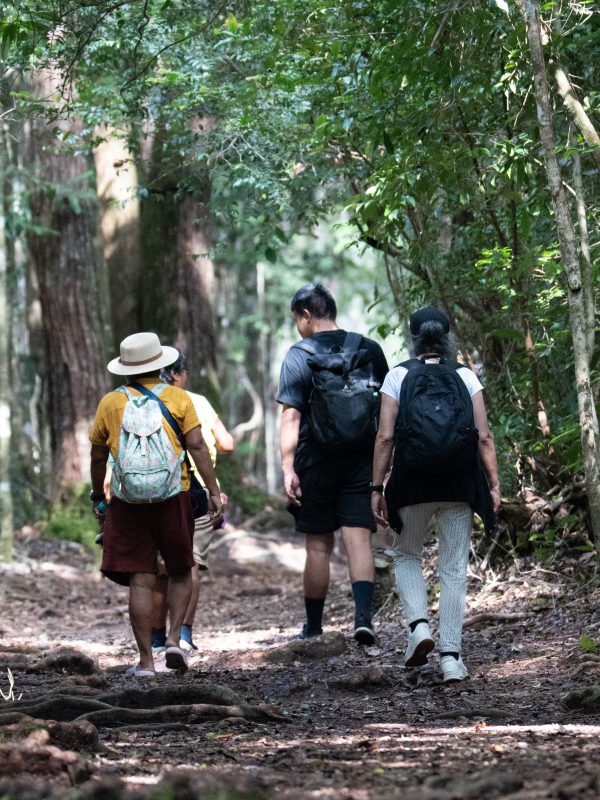
Today, Camp Leakey is also one of the most famous places to visit in Tanjung Puting National Park, where travelers can walk through tropical rainforest, learn about orangutan conservation, and potentially encounter wild and rehabilitated orangutans living in the surrounding forest.
But Camp Leakey is much more than an orangutan viewing site.
It is a place where decades of scientific research have changed what we know about orangutan behavior, reproduction, ecology, intelligence, and their relationship with the rainforest.
Where Is Camp Leakey?
Camp Leakey is located inside Tanjung Puting National Park, in Kotawaringin Barat Regency, Central Kalimantan, Indonesian Borneo.
The camp lies in the northwestern part of the national park, within a long-term orangutan research area associated with the Sekonyer Kanan River, a blackwater river flowing through the surrounding tropical forest.
Unlike many wildlife destinations that can be reached by road, Camp Leakey is accessed primarily by river.
Most visitors begin their journey in Kumai, the main gateway to Tanjung Puting National Park. From Kumai, travelers usually board a traditional wooden riverboat known as a klotok and travel upstream through the Sekonyer River system before continuing toward Camp Leakey.
The journey by boat is an important part of the experience.
Instead of simply driving to a wildlife attraction, visitors slowly enter the rainforest, surrounded by mangroves, peat-swamp forest, river vegetation, birds, monkeys, and other wildlife.
Why Is Camp Leakey Called Camp Leakey?
The name comes from Dr. Louis Leakey, the famous paleoanthropologist who became an important mentor and supporter of Biruté Galdikas.
Louis Leakey had already encouraged two other young researchers to study great apes in the wild: Jane Goodall, who studied chimpanzees in Africa, and Dian Fossey, who studied mountain gorillas in Rwanda.
Galdikas became the third member of what later became known as the “Trimates.”
Her mission was to study the orangutan in its natural habitat.
Camp Leakey was named in honor of Louis Leakey, who encouraged Galdikas to pursue her research and helped her obtain support for the project.
The Beginning of Camp Leakey in 1971
In 1971, Biruté Galdikas arrived in what was then the Tanjung Puting Wildlife Reserve.
At the time, the area was dramatically different from the destination travelers know today.
There were no modern tourist facilities, no easy communications, and very limited infrastructure. Galdikas and Rod Brindamour established a small field camp deep in the rainforest.
The original Camp Leakey consisted of little more than a couple of simple huts.
The environment was challenging.
Researchers had to deal with intense tropical humidity, heavy rain, mosquitoes, leeches, difficult river transportation, and dense swamp forest. Early fieldwork involved spending long hours in the forest observing orangutans and developing trails through areas that had previously been extremely difficult to access.
What began as a very small research station eventually became one of the most important long-term orangutan research sites in the world.
Biruté Galdikas and the Orangutans of Borneo
Dr. Biruté Mary Galdikas devoted her career to understanding the orangutan.
When she began her research, relatively little was known about orangutans living in the wild compared with African great apes.
Her long-term work at Camp Leakey helped change that.
Researchers have accumulated more than 150,000 hours of observations of wild orangutans in the Camp Leakey study area. The research has followed individual animals over long periods, allowing scientists to document important aspects of their lives and behavior.
This is one of the reasons Camp Leakey is so significant.
It is not simply a place where scientists occasionally study orangutans.
It represents one of the longest continuous field studies of a wild primate population.
What Have Scientists Learned at Camp Leakey?
Decades of research at Camp Leakey have contributed enormously to our understanding of orangutans.
Scientists have studied:
- Orangutan feeding behavior
- Social behavior
- Reproduction
- Mother-and-infant relationships
- Movement and home ranges
- Nest building
- Communication
- Cognition
- Male competition
- Forest ecology
- Food selection
- Population history
- Interactions between orangutans and other wildlife
Long-term observation has also allowed researchers to follow individual orangutans and their descendants over multiple generations.
One important discovery was that orangutans in Tanjung Puting are not necessarily completely solitary.
Although adult orangutans generally spend much of their time alone, research at Camp Leakey has documented more complex social relationships, particularly among younger animals and females with offspring.
Research has also provided valuable information about orangutan reproduction.
For example, long-term observations from the Camp Leakey study area helped document the exceptionally long interval between births in female orangutans.
These findings are important for conservation because species with slow reproduction can be particularly vulnerable to population decline.
Camp Leakey and Orangutan Rehabilitation
Camp Leakey also has an important history in orangutan rehabilitation and release.
When Galdikas arrived in Tanjung Puting, orangutans were still being kept as pets and were affected by hunting, habitat destruction, and the illegal wildlife trade.
Galdikas and her team worked with Indonesian authorities to rescue captive orangutans and prepare suitable animals for a return to the forest.
The first orangutan involved in the rehabilitation program was an infant named Sugito.
Over the following decades, the rehabilitation program expanded considerably. Between 1971 and 1995, approximately 200 wild-born ex-captive orangutans were released into Tanjung Puting National Park through Camp Leakey and other release locations established within the park.
The wider conservation program associated with Galdikas and the Orangutan Research and Conservation Project has subsequently rehabilitated and released hundreds of orangutans.
However, it is important for visitors to understand that Camp Leakey today should not be thought of simply as an orangutan rehabilitation center.
Its most important modern role is as a long-term research and conservation site.
Wild Orangutans at Camp Leakey
One of the most exciting aspects of visiting Camp Leakey is the possibility of seeing orangutans in their natural environment.
The surrounding forest is home to Bornean orangutans (Pongo pygmaeus).
Some orangutans encountered in the Camp Leakey area are wild-born animals, while others are descendants of orangutans that were previously rehabilitated and released.
Over the years, some rehabilitated orangutans have successfully reproduced in the forest, with their descendants becoming part of the wider population.
This is particularly meaningful.
When visitors see an orangutan moving through the trees around Camp Leakey, they are not necessarily seeing an animal living in captivity.
The surrounding forest is their habitat.
The animals are free to move through the rainforest, forage, build nests, interact with other orangutans, and disappear deep into the forest whenever they choose.
The Famous Orangutan Feeding Platform
Visitors to Camp Leakey may also have the opportunity to observe orangutans around a designated feeding area.
Historically, supplementary feeding played an important role in the rehabilitation program because newly released orangutans needed additional support while learning how to survive independently in the forest.
Feeding platforms also became useful locations for researchers to observe individual orangutans and collect behavioral data.
However, travelers should understand an important distinction:
The feeding platform is not a zoo enclosure.
Orangutans are free-ranging animals, and there is no guarantee that they will appear during a particular visit.
Their presence depends on many factors, including natural food availability, weather, individual behavior, and their location in the forest.
This uncertainty is part of what makes wildlife tourism in Tanjung Puting different from visiting a conventional wildlife park.
What Wildlife Can You See Around Camp Leakey?
Orangutans are the main attraction, but they are far from the only wildlife found around Camp Leakey.
The surrounding forest supports a diverse tropical ecosystem.
Depending on the season, weather, and time of day, visitors may encounter:
Proboscis Monkeys
The proboscis monkey (Nasalis larvatus), locally known as bekantan, is one of the iconic primates of Borneo.
They are particularly associated with riverine and mangrove habitats.
Gibbons
Gibbons can sometimes be heard before they are seen.
Their loud calls can travel surprisingly far through the rainforest.
Long-tailed Macaques
These adaptable monkeys are frequently encountered around river and forest habitats throughout Tanjung Puting.
Leaf-eating Monkeys
Several species of leaf-eating monkeys occur in the wider Tanjung Puting ecosystem and have also been subjects of research associated with Camp Leakey.
Birds
Tanjung Puting is an excellent destination for birdwatching.
The forest and rivers support hornbills, kingfishers, eagles, herons, woodpeckers, and many other tropical species.
Reptiles
Crocodiles and other reptiles inhabit the park’s rivers and wetlands.
The rainforest around Camp Leakey is therefore much more than an orangutan habitat. It is part of a complex ecosystem containing hundreds of interconnected species.
The Forest Around Camp Leakey
The landscape surrounding Camp Leakey is particularly interesting because it contains several tropical forest ecosystems.
The research area includes tropical peat-swamp forest, heath forest, and areas of mixed dipterocarp forest. The Sekonyer Kanan River forms part of the western boundary of the study area.
Peat-swamp forests are especially important in Central Kalimantan.
They store enormous amounts of carbon and support specialized plants and animals adapted to wet, acidic conditions.
Walking through the forest around Camp Leakey gives visitors an opportunity to experience this ecosystem at ground level.
You may notice large buttress roots, pitcher plants, palms, vines, ferns, orchids, insects, and towering rainforest trees.
The forest itself is as important as the orangutans.
Without the forest, there can be no wild orangutans.
Camp Leakey Is Still a Research Station
One of the most important things to remember when visiting Camp Leakey is that it remains an active research facility.
The camp has supported research by scientists and students from Indonesia and other countries.
Research has extended beyond orangutans to include:
- Proboscis monkeys
- Gibbons
- Leaf-eating monkeys
- Forest ecology
- River systems
- Plant communities
- Leeches
- Orangutan cognition and communication
The Camp Leakey study area has also supported students whose fieldwork eventually contributed to academic theses and doctoral research.
For this reason, visitors should treat the area as a scientific field station rather than simply a tourist attraction.
Can You Stay Overnight at Camp Leakey?
No.
Camp Leakey is an active research facility, and visitors are not permitted to stay overnight at the camp itself.
Day visitors can visit the area with appropriate permits and local guides, while overnight accommodation for Tanjung Puting trips is normally provided aboard a klotok or at designated accommodation elsewhere in the park or surrounding area.
For most travelers, spending the night on a klotok is actually one of the highlights of a Tanjung Puting experience.
You sleep on the river, surrounded by rainforest.
At night, the forest changes completely.
Insects become louder, frogs call from the vegetation, and the river becomes a dark corridor through the rainforest.
How Do You Get to Camp Leakey?
The most common way to visit Camp Leakey is as part of a Tanjung Puting National Park orangutan tour.
A typical journey begins in Pangkalan Bun or Kumai.
From there:
Pangkalan Bun → Kumai → Sekonyer River → Tanjung Puting National Park → Camp Leakey
The journey into the park is normally made by a traditional klotok, a wooden riverboat designed for navigating the rivers of Central Kalimantan.
The exact travel time depends on the river conditions, boat, itinerary, and stopping points.
For many visitors, the river journey is almost as memorable as Camp Leakey itself.
You gradually leave the developed world behind and enter a landscape dominated by rainforest and blackwater rivers.
What Is a Klotok?
A klotok is a traditional wooden riverboat commonly used for river travel in Central Kalimantan.
Tourist klotok boats are generally equipped with:
- Sleeping areas
- Mattresses
- Mosquito nets
- Dining areas
- Toilet facilities
- Open decks for wildlife watching
Some boats are basic while others are considerably more comfortable.
Traveling by klotok allows visitors to spend several days inside the national park rather than simply making a short day trip.
When Is the Best Time to Visit Camp Leakey?
Tanjung Puting can be visited throughout much of the year, but conditions vary considerably between seasons.
The drier months can provide more comfortable conditions for hiking and river travel, while the rainy season can bring heavier rainfall and higher water levels.
However, there is no single month that guarantees orangutan sightings.
Orangutans are wild animals.
Their behavior is influenced by natural food availability, weather, reproduction, and where individual animals happen to be on a particular day.
If your main goal is wildlife observation and photography, spending multiple days inside Tanjung Puting National Park generally gives you more opportunities than attempting a very short visit.
How Long Should You Spend in Tanjung Puting?
For travelers visiting Camp Leakey, a 3-day/2-night Tanjung Puting itinerary is a popular option.
However, longer trips can provide a more relaxed experience.
A typical itinerary may include:
Day 1
Travel from Kumai into Tanjung Puting National Park by klotok, with wildlife watching along the river.
Day 2
Visit Camp Leakey and explore the surrounding forest, followed by additional wildlife observation along the river.
Day 3
Continue wildlife watching before returning toward Kumai.
Longer itineraries can include additional destinations such as Pondok Tanggui and Tanjung Harapan, depending on the current park regulations and tour itinerary.
Is Camp Leakey Worth Visiting?
For travelers interested in orangutans, wildlife, photography, conservation, or tropical rainforests, Camp Leakey is absolutely worth visiting.
But its value goes beyond the possibility of seeing an orangutan.
A visit connects travelers with more than 50 years of scientific research and conservation history.
You are walking through the same forest where researchers have followed orangutans for decades.
You are visiting a site that has contributed to our understanding of one of the world’s most fascinating great apes.
And you are entering an ecosystem where conservation, science, local communities, tourism, and wildlife protection all intersect.
Camp Leakey and Responsible Tourism
Visiting Camp Leakey comes with an important responsibility.
Wild orangutans should never be treated like pets or entertainment.
Visitors should:
- Keep a respectful distance from orangutans.
- Never attempt to touch or feed an orangutan.
- Never use flash photography when it could disturb wildlife.
- Follow the instructions of park rangers and guides.
- Stay on designated trails.
- Do not leave plastic or other waste behind.
- Avoid loud behavior around wildlife.
- Do not interfere with researchers.
- Follow all current Tanjung Puting National Park regulations.
Official guidance emphasizes that visitors should have the appropriate permits, check in with rangers, observe orangutans from a safe distance, and avoid disturbing research activities.
The goal should not simply be to get the perfect photograph.
The goal is to experience the forest without negatively affecting the animals that live there.
Camp Leakey and the Future of Orangutan Conservation
The story of Camp Leakey is also a reminder of how vulnerable orangutans and their habitat remain.
Tanjung Puting protects one of the most important orangutan habitats in Indonesian Borneo, but conservation challenges continue.
Habitat loss, illegal wildlife trade, forest fires, human-wildlife conflict, and other pressures can threaten orangutans and the ecosystems they depend on.
Tanjung Puting’s landscape includes extensive peat-swamp forest, an ecosystem that can be particularly vulnerable to fire during prolonged dry periods.
This makes the continued protection of the forest around Camp Leakey critically important.
The future of orangutans depends not only on rescuing individual animals but also on protecting large, connected areas of suitable habitat.
Camp Leakey: More Than a Tourist Attraction
It is easy to describe Camp Leakey simply as “a place to see orangutans.”
That description is incomplete.
Camp Leakey represents more than five decades of scientific research.
It represents the career of Biruté Galdikas and generations of researchers who have studied orangutans in the wild.
It represents the history of orangutan rehabilitation in Central Kalimantan.
It represents the transformation of Tanjung Puting from a remote wildlife reserve into one of Indonesia’s best-known conservation landscapes.
And perhaps most importantly, it represents the idea that understanding wildlife is one of the first steps toward protecting it.
Frequently Asked Questions About Camp Leakey
Where is Camp Leakey located?
Camp Leakey is located inside Tanjung Puting National Park in Central Kalimantan, Indonesian Borneo, near the Sekonyer Kanan River.
Who founded Camp Leakey?
Camp Leakey was established in 1971 by Dr. Biruté Mary Galdikas and Rod Brindamour.
Why is it called Camp Leakey?
It was named after Dr. Louis Leakey, the paleoanthropologist who mentored and supported Biruté Galdikas.
Can tourists visit Camp Leakey?
Yes. Camp Leakey welcomes day visitors with local guides, subject to the appropriate permits and park regulations.
Can you stay overnight at Camp Leakey?
No. Camp Leakey is an active research facility and does not provide overnight accommodation for visitors.
Can I see orangutans at Camp Leakey?
There is a good opportunity to encounter orangutans, but sightings are never guaranteed because they are wild animals.
Are the orangutans at Camp Leakey wild?
The surrounding population includes wild orangutans as well as descendants of previously rehabilitated and released ex-captive orangutans.
How do I get to Camp Leakey?
Most travelers reach Camp Leakey by klotok from Kumai, traveling through the river system into Tanjung Puting National Park.
How many days do I need for Camp Leakey?
A 3-day/2-night trip is a popular choice, although longer itineraries provide more time for wildlife observation and rainforest exploration.
What other animals can I see?
Besides orangutans, visitors may encounter proboscis monkeys, macaques, gibbons, birds, reptiles, and many other rainforest species.
Final Thoughts
Camp Leakey is one of those rare places where wildlife tourism, science, history, and conservation come together.
For more than 50 years, researchers have walked through this forest studying orangutans and documenting their lives.
The result is one of the world’s most important long-term studies of a wild primate population.
For travelers, visiting Camp Leakey offers something much deeper than a wildlife encounter.
It is an opportunity to enter the rainforest of Borneo, travel by river through Tanjung Puting National Park, walk in a forest shaped by decades of conservation, and perhaps look up into the trees and see one of the world’s last great apes living where it belongs—in the wild.
If seeing orangutans in their natural habitat is on your travel list, Camp Leakey and Tanjung Puting National Park deserve a place near the top.
Plan Your Camp Leakey & Tanjung Puting Orangutan Adventure
The easiest way to experience Camp Leakey is as part of a multi-day Tanjung Puting National Park orangutan tour.
Traveling by klotok allows you to explore the river, spend nights inside the rainforest, visit Camp Leakey, and search for orangutans and other wildlife along the way.
For the best wildlife experience, consider allowing at least 3 days and 2 nights in the park.
Ready to see orangutans in the wild? Explore our Tanjung Puting National Park tours and start planning your Borneo adventure.