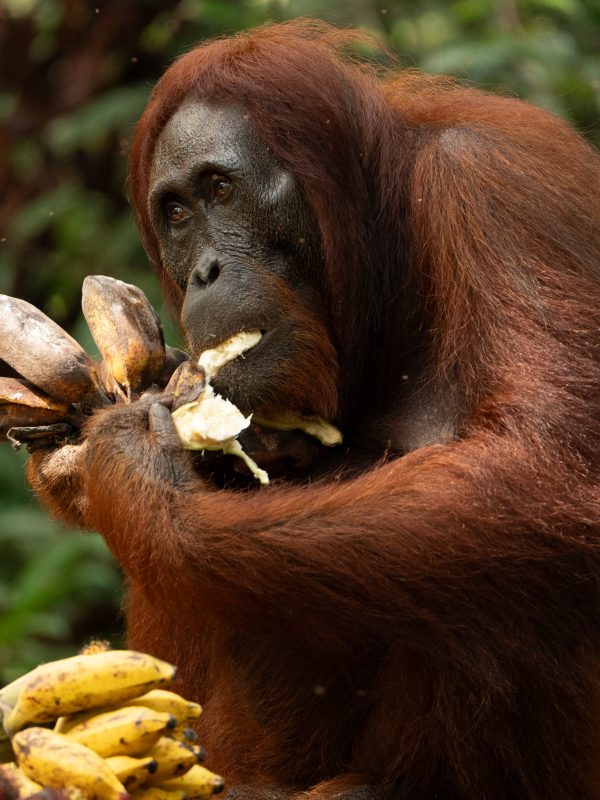
For wildlife photographers, few destinations compare to Tanjung Puting National Park in Indonesian Borneo. Home to one of the world’s largest protected populations of Bornean orangutans, the park offers an extraordinary opportunity to observe and photograph these endangered great apes in their natural rainforest habitat.
Whether you’re carrying a professional telephoto lens or simply using your smartphone, knowing where and when to photograph orangutans can dramatically improve your chances of capturing memorable images.
In this guide, we’ll introduce the best photography locations inside Tanjung Puting National Park and share practical tips to help you take ethical, beautiful wildlife photographs.
1. Camp Leakey – The Most Iconic Orangutan Photography Location
If you’ve seen photographs of orangutans from Tanjung Puting, there’s a good chance they were taken at Camp Leakey.
Founded in 1971 by renowned primatologist Dr. Biruté Galdikas, Camp Leakey is one of the world’s best-known orangutan research and conservation centres. It remains one of the most reliable places to observe semi-wild orangutans that freely roam the surrounding rainforest.
Why photographers love Camp Leakey
- Large adult males with impressive cheek pads
- Mothers carrying young infants
- Orangutans descending from towering trees
- Beautiful rainforest backgrounds
- Excellent opportunities for behavioural photography
Photography is often best during the scheduled feeding times, when orangutans naturally gather in the forest clearing. Even outside feeding sessions, sightings along the boardwalk are common.
2. Pondok Tanggui – Perfect for Mothers and Baby Orangutans
For many visitors, Pondok Tanggui becomes the emotional highlight of the trip.
Originally established as a rehabilitation site for young orangutans, the area is now famous for frequent sightings of females with playful juveniles.
Photographers particularly enjoy:
- Babies clinging to their mothers
- Young orangutans learning to climb
- Family interactions
- Expressive facial portraits
- Natural forest compositions
If your goal is to capture heartwarming wildlife moments, Pondok Tanggui is one of the best places in the park.
3. Tanjung Harapan – Great for Close Encounters
Located near the entrance of the national park, Tanjung Harapan is usually the first orangutan feeding station visited during most cruises.
Although smaller than Camp Leakey, it offers excellent photographic opportunities because:
- The walking trail is relatively short.
- Orangutans sometimes appear very close to visitors.
- Soft morning light filters through the forest canopy.
- Visitor numbers are often lower than at Camp Leakey.
It’s an ideal location for photographers who enjoy environmental portraits showing orangutans within their rainforest habitat.
4. Along the Sekonyer River – Orangutans in the Wild
Some of the most rewarding photographs are taken away from the feeding platforms.
As your traditional klotok boat slowly cruises along the Sekonyer River, it’s not uncommon to spot wild orangutans feeding high in fruiting trees along the riverbanks.
These encounters often feel more authentic because the animals are completely wild and behaving naturally.
Possible photo subjects include:
- Orangutans crossing tree branches
- Feeding in the canopy
- Nest building
- Silhouettes at sunset
- Wide-angle rainforest scenes
A telephoto lens of 300–600 mm is especially useful for these spontaneous sightings.
5. Hidden Jungle Trails
Occasionally, your local guide may encounter orangutans while hiking between camps or during short forest walks.
These unexpected sightings often produce the most unique images because there are:
- No feeding platforms
- Fewer people nearby
- Completely natural behaviours
- Beautiful forest lighting
Patience is essential. Wildlife photography is unpredictable, but these moments often become the most memorable.
Best Time of Day for Orangutan Photography
Lighting can make all the difference.
Early Morning
- Soft golden light
- Cooler temperatures
- Active wildlife
- Misty rainforest atmosphere
Late Afternoon
- Warm colours
- Lower contrast
- Beautiful side lighting
- Ideal for portraits
Midday sunlight can create harsh shadows beneath the forest canopy, although the dense rainforest often softens the light.
Camera Gear Recommendations
DSLR or Mirrorless
Recommended lenses:
- 100–400 mm
- 200–600 mm
- 70–200 mm
- 24–70 mm for landscapes
Smartphones
Modern smartphones can produce excellent results by:
- Using portrait mode carefully
- Avoiding excessive digital zoom
- Shooting in HDR
- Waiting patiently for natural poses
Photography Tips
- Focus on the eyes whenever possible.
- Use continuous autofocus for moving subjects.
- Shoot in burst mode during climbing or swinging.
- Increase ISO instead of using flash.
- Keep your camera ready at all times on the boat.
Many of the best sightings happen unexpectedly.
Ethical Wildlife Photography
Photographing wildlife comes with responsibility.
Always remember to:
- Never use flash.
- Keep a respectful distance.
- Follow your guide’s instructions.
- Stay on designated trails.
- Never feed or attract wildlife.
- Avoid making loud noises.
- Respect other visitors’ viewing experience.
Responsible tourism helps protect Tanjung Puting’s orangutans for future generations.
Final Thoughts
Tanjung Puting National Park offers some of the finest orangutan photography opportunities anywhere on Earth. From the famous feeding stations of Camp Leakey, Pondok Tanggui, and Tanjung Harapan to unexpected encounters along the Sekonyer River, every day in the rainforest brings new possibilities.
Whether you’re an experienced wildlife photographer or simply hoping to capture unforgettable travel memories, patience, respect for wildlife, and a bit of luck are all you need to come home with extraordinary images.
If you’re planning an orangutan photography adventure, consider spending at least 3 days and 2 nights on a klotok cruise. The extra time allows you to experience different lighting conditions, visit multiple camps, and significantly increase your chances of photographing orangutans in a variety of natural settings.