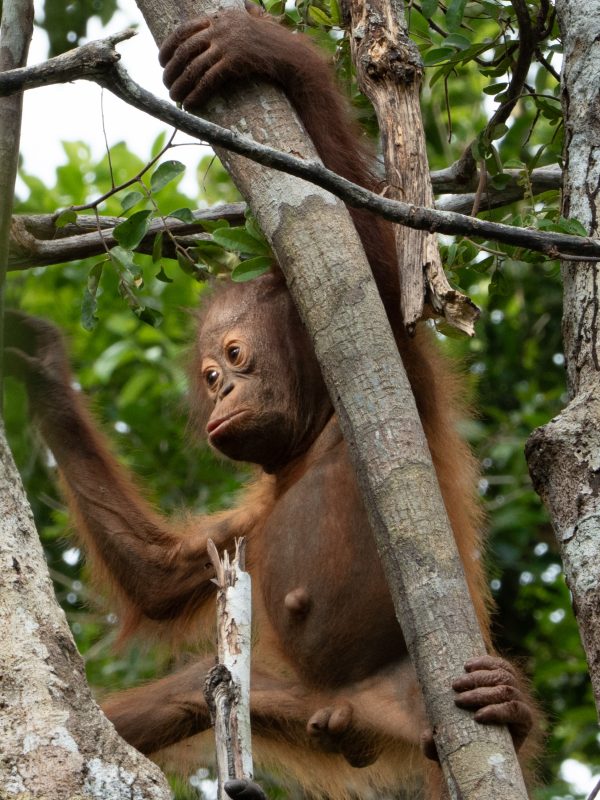
Few animals capture our hearts quite like baby orangutans. With their curious eyes, fluffy orange hair, and playful personalities, they are among the most beloved residents of Borneo’s tropical rainforests. But behind their adorable appearance lies an incredible story of learning, patience, and survival.
Unlike many mammals that become independent within months, baby orangutans spend nearly a decade learning everything they need to survive. Every day is a lesson, and every tree becomes a classroom.
If you’re fortunate enough to join an orangutan tour in Borneo, watching a mother and her baby interact is often one of the most memorable moments of the journey.
The Longest Childhood in the Animal Kingdom
Orangutans have one of the longest childhoods of any non-human animal.
After birth, a baby orangutan depends entirely on its mother for food, protection, and guidance. During the first few years, the baby rarely leaves her side, clinging tightly to her body as she moves effortlessly through the forest canopy.
This close bond is essential because the rainforest is a challenging environment filled with dangers and constant changes in food availability.
Young orangutans typically remain with their mothers for seven to nine years, making it one of the longest periods of parental care in the animal kingdom.
Lesson One: Learning to Climb
Life in the rainforest happens high above the ground.
Before a baby orangutan can explore independently, it must master climbing. At first, the young ape simply holds onto its mother while she travels from tree to tree.
As it grows stronger, curiosity takes over.
The baby begins reaching for nearby branches, swinging short distances, and practicing balance under its mother’s watchful eye.
Every climb builds confidence and improves coordination.
Although playful, these early adventures are preparing the young orangutan for a lifetime in the treetops.
Lesson Two: Finding Food
Knowing what to eat is one of the most important survival skills an orangutan can learn.
Borneo’s rainforest contains hundreds of plant species, but only some provide safe and nutritious food.
A mother orangutan teaches her offspring by example.
The baby carefully watches which fruits she selects, how she opens hard shells, and which leaves or bark can be safely eaten.
Favorite foods include:
- Wild figs
- Durian
- Rambutan
- Young leaves
- Flowers
- Tree bark
- Insects
- Honey
Because fruit availability changes throughout the year, young orangutans also learn where and when certain trees produce food.
This knowledge can mean the difference between survival and starvation.
Lesson Three: Building a Nest
Unlike many animals that use permanent shelters, orangutans build a new nest almost every evening.
Using strong branches and fresh leaves, a mother carefully constructs a comfortable platform high in the trees.
At first, her baby simply watches.
Later, it begins helping by collecting leaves and bending smaller branches.
Eventually, the young orangutan learns to build its own sleeping nest—a skill that will be used every night for the rest of its life.
Lesson Four: Understanding the Forest
The rainforest is much more than a collection of trees.
It is a complex ecosystem where every sound, smell, and movement provides important information.
As they grow, baby orangutans learn to recognize:
- Fruiting trees
- Safe travel routes
- Seasonal food sources
- Weather changes
- Potential dangers
- Other orangutans living nearby
This deep understanding of the forest cannot be learned overnight.
It takes years of observation and experience.
Learning Through Play
To human observers, young orangutans often appear playful—and they certainly are.
They swing from vines, wrestle with siblings, chase insects, and investigate almost everything they encounter.
But play serves a much greater purpose.
Every playful activity strengthens muscles, improves balance, develops problem-solving skills, and builds confidence.
Even something as simple as hanging upside down from a branch helps prepare them for life in the forest canopy.
A Mother’s Remarkable Dedication
Mother orangutans are among the most devoted parents in the animal kingdom.
Unlike many mammals, female orangutans usually raise only one infant at a time.
Because caring for a baby requires so much time and energy, mothers typically give birth only once every seven to nine years.
During those years, she patiently teaches every skill her offspring needs to survive.
Her investment is enormous, but it gives the young orangutan the best possible chance of living independently.
Challenges Facing Baby Orangutans
Growing up in the rainforest is not easy.
Young orangutans face numerous challenges, including:
- Habitat loss from deforestation
- Forest fires
- Climate change
- Illegal wildlife trade
- Reduced food availability
- Human disturbance
Because babies remain dependent on their mothers for many years, they are especially vulnerable when forests disappear or adult females are threatened.
Protecting orangutan habitat is essential for ensuring future generations can continue to thrive.
Seeing Baby Orangutans in the Wild
One of the highlights of visiting Borneo is observing wild orangutans behaving naturally in their rainforest home.
If you’re lucky, you may see a mother carrying her infant through the trees or patiently teaching it how to forage for food.
Responsible wildlife tours maintain a respectful distance, allowing visitors to witness these remarkable moments without disturbing the animals.
The experience is both inspiring and humbling.
Watching a young orangutan learn from its mother offers a glimpse into one of nature’s most extraordinary relationships.
Why Orangutan Conservation Matters
Every baby orangutan represents the future of the species.
Their survival depends on healthy rainforests, protected habitats, and responsible conservation efforts.
By choosing ethical orangutan tours, travelers help support:
- Rainforest conservation
- Wildlife research
- Local communities
- Sustainable ecotourism
- Long-term orangutan protection
Every responsible visit contributes to preserving one of the world’s most remarkable ecosystems.
Experience the Magic of Wild Orangutans
Reading about baby orangutans is fascinating, but seeing one in the wild is an unforgettable experience.
In the rainforests of Borneo, every encounter tells a story of patience, learning, and survival. Whether it’s a curious youngster practicing its climbing skills or a devoted mother teaching her baby where to find food, these moments leave a lasting impression.
An orangutan tour isn’t just about spotting wildlife—it’s about understanding the incredible lives of these intelligent great apes and the importance of protecting their forest home for generations to come.
Frequently Asked Questions
How long do baby orangutans stay with their mothers?
Baby orangutans usually remain with their mothers for seven to nine years, making it one of the longest periods of parental care among mammals.
What do baby orangutans eat?
During infancy, they rely on their mother’s milk. As they grow, they gradually learn to eat fruits, leaves, flowers, bark, insects, and other natural foods found in the rainforest.
Why do baby orangutans spend so much time with their mothers?
They must learn essential survival skills, including climbing, finding food, building nests, and navigating the complex rainforest environment.
Where can you see baby orangutans in the wild?
One of the best places is Tanjung Puting National Park in Indonesian Borneo, where visitors on ethical orangutan tours may observe mothers and babies living freely in their natural habitat.