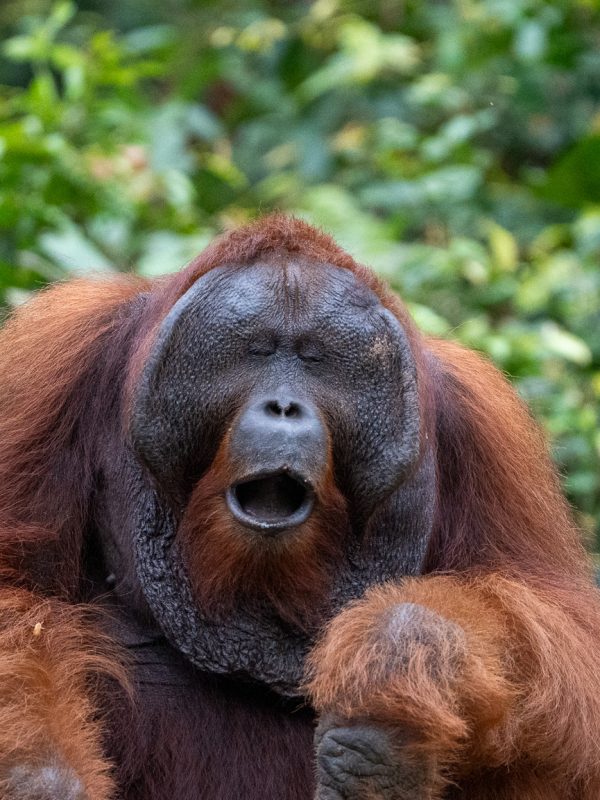
Deep inside the ancient rainforests of Borneo, orangutans still swing through the trees as they have for thousands of years. Their orange hair glows under the tropical sunlight, and their slow, thoughtful movements make the forest feel timeless.
But today, that silence of the rainforest carries a difficult truth.
Orangutans are endangered.
The forests that once stretched endlessly across Borneo are disappearing, and with them, the future of one of the most intelligent animals on Earth.
At orangutantour.co, we believe that understanding the challenges facing orangutans helps travelers become part of the solution — not just visitors to the rainforest.
What Does “Endangered” Mean?
The Bornean orangutan is classified as critically endangered, meaning the species faces an extremely high risk of extinction in the wild.
Orangutans live only in the rainforests of Borneo and Sumatra. In Borneo, they can still be found in places like:
- Tanjung Puting National Park
- Sebangau National Park
- Gunung Palung National Park
- Danum Valley
These forests are among the last strongholds protecting wild orangutans.
The Biggest Threat: Deforestation


6
The greatest threat to orangutans is habitat loss.
Orangutans spend almost their entire lives in trees. They travel, eat, sleep, and raise their babies high in the rainforest canopy. When forests disappear, orangutans lose everything they need to survive.
Large areas of rainforest in Borneo have been cleared for:
- Palm oil plantations
- Logging
- Mining
- Road development
- Agriculture
As forests become smaller and fragmented, orangutans struggle to find food, mates, and safe nesting areas.
Many are forced closer to human settlements, creating conflict and danger.
Palm Oil and Orangutan Habitat
Palm oil itself is not the enemy. It is found in many everyday products, from snacks to cosmetics.
The problem comes when rainforest is cleared unsustainably to create massive plantations.
Borneo has experienced rapid palm oil expansion over the last few decades, and millions of hectares of rainforest have disappeared.
For orangutans, this means:
- Loss of food sources
- Isolation between forest areas
- Increased human encounters
- Difficulty raising young
Because orangutans reproduce very slowly — usually one baby every 6 to 8 years — populations recover extremely slowly after habitat destruction.
Forest Fires in Borneo


6
Forest fires are another major threat, especially in peat swamp forests like those in Sebangau National Park.
Peat forests store huge amounts of carbon underground. When these forests are drained and burned, fires can spread deep beneath the surface and continue for weeks or even months.
These fires destroy:
- Orangutan habitat
- Food trees
- Nesting areas
- Entire ecosystems
During severe fire seasons, smoke can cover large parts of Borneo and force wildlife to flee deeper into shrinking forests.
Illegal Hunting and Wildlife Trade
Although protected by law, orangutans are still threatened by hunting and illegal wildlife trade.
Baby orangutans are sometimes captured for the pet trade. In most cases, this happens only after the mother has been killed trying to protect her baby.
This is one reason seeing a baby orangutan alone in the wild is often heartbreaking.
Conservation organizations across Borneo work to rescue and rehabilitate orphaned orangutans whenever possible.
Why Orangutans Are Vulnerable


Orangutans are especially vulnerable because they reproduce very slowly.
A female orangutan may only have:
- One baby every 6–8 years
- Around 3–4 babies in her entire lifetime
The baby stays with its mother for many years, learning how to survive in the rainforest.
If adult orangutans disappear faster than babies can grow up, populations decline quickly.
This slow reproduction rate makes conservation incredibly important.
How Conservation Efforts Help
Despite the challenges, there is still hope.
National parks, conservation groups, researchers, local communities, and responsible tourism operators are working together to protect orangutans and their habitat.
Protected areas like:
- Tanjung Puting National Park
- Sebangau National Park
play a vital role in preserving rainforest ecosystems.
Conservation work includes:
- Forest protection
- Orangutan rescue and rehabilitation
- Reforestation projects
- Environmental education
- Sustainable tourism development
How Responsible Tourism Makes a Difference
When travelers choose ethical local tours, tourism can directly support conservation and local livelihoods.
Responsible tourism helps by:
- Creating jobs connected to forest protection
- Supporting local communities
- Reducing pressure for destructive land use
- Funding conservation initiatives
- Raising awareness about rainforest protection
At orangutantour.co, we believe tourism should help preserve the rainforest for future generations — not damage it.
What Travelers Can Do to Help Orangutans
Even small actions can make a difference.
Choose Responsible Tours
Support local eco-tourism operators who respect wildlife and conservation guidelines.
Avoid Wildlife Exploitation
Never touch, feed, or take selfies with wild orangutans.
Learn About Sustainable Palm Oil
Supporting sustainable products helps reduce pressure on rainforest destruction.
Spread Awareness
The more people understand the importance of orangutans, the stronger conservation efforts become.
A Future Worth Protecting


Orangutans are more than a symbol of Borneo.
They are gardeners of the rainforest, helping spread seeds and maintain the health of one of the richest ecosystems on Earth.
Protecting orangutans also means protecting:
- Rainforests
- Rivers
- Biodiversity
- Indigenous knowledge
- The future of Borneo itself
Every journey into the rainforest is also a reminder that these forests are still alive — and still worth protecting.
If you dream of seeing wild orangutans responsibly in their natural habitat, explore authentic rainforest adventures with orangutantour.co